
( I don’t know what I’m doing, so will only work this out by trying.)
Since my July detox I have come unstuck
I’ve:
Gained bloat round my problem area.
Gained 6lbs
Lost my appetite
Feel Lousy
Apparently it will go down again but not sure when.
Four months later still waiting for the information.
Also have got fed up of waiting and decided to make active and focussed changes to get the bloat back down.
I’m not bothered about the weight gain.
But the bloat and the loss of appetite, ‘is’ bothering me.

This day off I’m not hungry so I have a theory if I go on a calorie controlled diet which also reduces salt and fat, hopefully I will burn the energy in the bloat off ~ like how a hamster stores energy.
If I get hungry it will be working.
Then by the end of October I will be hungry for my day off.
Then if I get the 6lbs off by Christmas it doesn’t matter if I put weight on during the 8 days of christmas.

I really don’t understand what the detox has done to me.
The nerd is getting the info for me so when I get it will write up the findings for you, if you are as confused as me.
Getting Back on Track With Goal Setting
Decided to search my blog to see if I have one on goal setting ~ found this:
Pretty bleak.
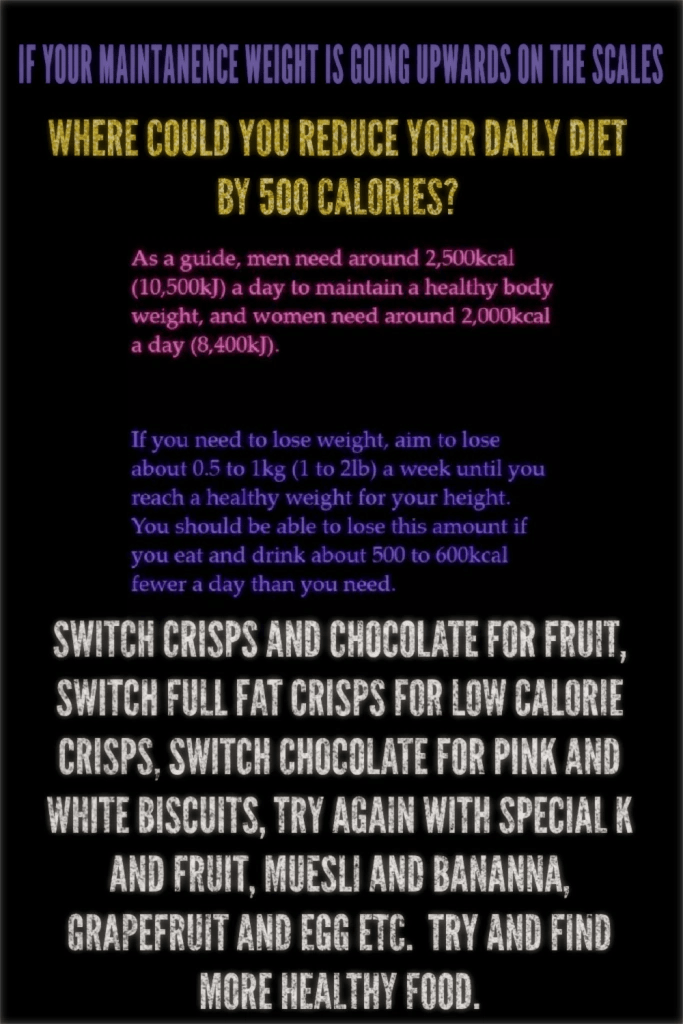
Salvaged these ideas


I still can’t get stationary so will make my own like the exercise planner.
If you want any of these products but are fed up of excessive advertising just scroll over the image you want, visit site comes up in the bottom left corner, click on visit site and you get straight through to the vendor. I don’t make money so it isn’t click bait.
Food Diary
You have to be honest with yourself here then you realise where you need to change your diet.
| Food Diary | Breakfast | Lunch | Dinner | Supper | Snacks |
| Mon | |||||
| Tue | |||||
| Wed | |||||
| Thu | |||||
| Fri | |||||
| Sat | |||||
| Sun |
I find it easier to copy it out and write it up in a little jotter pad but you could copy this table into your computer site and store it online.
Reducing Salt content in food
“Low salt” per 100g of food means the product contains 0.3g of salt or less per 100g. This guideline helps identify foods that are better for reducing daily salt intake, as high-salt foods can increase blood pressure and the risk of heart disease.
What to look for on food labels:
- Low salt: 0.3g of salt or less per 100g.
- Medium salt: More than 0.3g and up to 1.5g of salt per 100g.
- High salt: More than 1.5g of salt per 100g.
Understanding sodium vs. salt:
- Food labels sometimes list sodium instead of salt.
- To convert sodium to salt, multiply the sodium amount by 2.5 (e.g., 0.6g sodium x 2.5 = 1.5g salt).
- A “low salt” food can also be identified by checking for less than 120mg of sodium per 100g.
Tips for choosing low-salt foods:
- Check the food labels on the back of products for salt or sodium content.
- Look for fresh, unprocessed foods like fruits and vegetables, as they are naturally low in salt.
- Choose products that are labelled as “salt reduced” or “no added salt”.
Google search
I’ve put doing this off as I was hungry and just grateful to get meat and food last year.
To be honest I’ve never done this before.
I switched from salt to sea salt but didn’t read food labels for salt content.
(Noticed this is a really hard task 0.3g or less per 100g.
Also some low salt products are high in fat.)
However after detoxing salt from last year and still bloating, have to reduce my salt as don’t want more discomfort.
If you feel a bit like me maybe we can face up to the little red high salt label on food products together.
Made a massive error with pastrami.
You can still eat it on days off or better still source a low salt product if there is one?
Another problem is low calorie cereal that is high in other additives.
Also a bit boring doing this, I’ve never been that fussy till now but now have no option if I want my hunger back for my days off.
How to find salt content in your food products
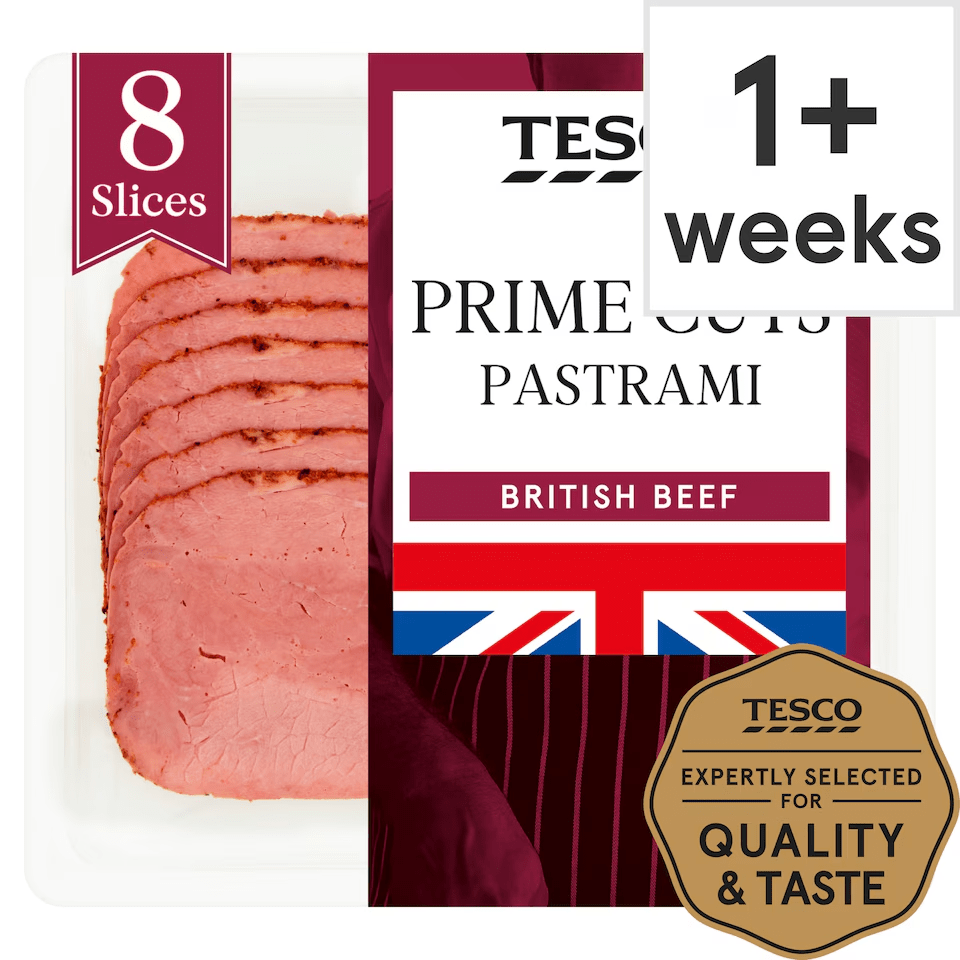

This is just medium fat and salt so maybe not that bad. But for slimming and reducing bloat I’m going to have to go for low salt options.
Discovered this is low in everything


Where as this one is:


It is still not too bad I suppose but maybe this medium amount of salt is what I’m still detoxing now.
In an ideal world we would cook from fresh everyday or have our own cook or chef prepare calorie controlled food.
As most of us live in the real world that still is restricting food from us for some reason?
We just have to do our best.
I remember in days of yore before covid, nutritionists would tell you to eat brown rice and wholemeal pasta.
For some reason these are never in low calorie ready meals?
Survival tactics when you haven’t a hob in a world that won’t sell us the food we want and need to be healthy
I used to be inventive with the food I, ‘could’ get.
This year I will go back to doing that and count my salt intake.
One idea is a vegetarian recipe from when I was a vegetarian.
Vegetables and Potatoes with Grilled Melted low fat cheese
You can make it as a side dish for low calorie, fat and salt meat or tuna and so forth if you aren’t vegetarian.
It is really easy but makes vegetables taste nicer.
All you do is par boil or steam vegetables or vegetables and potatoes and so forth.
Slice the vegetables and potatoes.
Put low calorie cheese on top then grill till golden brown.
You can experiment with this simple idea.
For instance use sliced potatoes, sliced onions and cheese and it is like or is low calorie Potato Gratin.
You can fancy it up with shallots.
If you add meat and gravy it is casserole.
As we haven’t a hob I steam the potatoes and vegetables in the oven under foil then melt the cheese over them for the last 5 minutes.
If you are living on egg salads from M and S like us.
In winter I make egg and grapefruit with the eggs.
Seperate the sliced potatoes, tomatoes and onion and store in foil.
The salad I then use as tuna salad or in sandwiches for lunch.
The potatoes, tomatoes and onion I heat up in a tray, then take the foil off and add the cheese for the last 5 minutes.
This year I’m going to add vegetables to this idea.
Anyone in your home not slimming can have the veg as a side with their meal.
Everyone should eat 5 fruit and veg everyday so they should try and eat it anyway.
So far it is sort of saying meat, potatoes and vegetables are actually the healthiest way to go.
This could be a book to add to why Japanese women don’t get fat and old or how French women stay slim.
Were English people slimmer eating traditional English meat, potato and vegetable dinners?
I’m not a chef or a writer but there may be something in it?
They might not of been anyway ~ who knows?
There never used to be pasta or quinoi on school dinner menus and all the children were skinny and healthy ~ just saying in mho.
This is what I’m ploughing away at this year anyway.
Another thing I started doing last year was just eating the potatoes out of ready meals and leaving the sauce side which I guess is where the salt content is.
We had to do this for the Halloween and Victorian day off as we can’t get potatoes where we are.
Hopefully the pre washed ones at M and S will come back and their pre washed jacked potatoes ~ we used to have those every week in Winter.
Then you just serve with low fat cheese and a salad or chilli and so forth.
High and Medium salt content de – clutter
I do the Lizzie biscuit type declutter and throw anything left over from the parties ~ we haven’t got much storage space so have to declutter all the time anyway.
If you are cutting down on salt too this is a good way to start.
You can look the salt content label up on the internet if the writing is too small.
A fairly laborious project but when it is finished you will have more space and hopefully be healthier with your new diet.
Also once you get your head round it you will be knowlegeable in a new aspect of slimming so worth doing.
How much salt, ‘do’ you need?
As well as not over eating salt, we do actually need some salt and it is essential to us.
I’m getting the nerd to find this out as the internet isn’t always a reliable source of information.
I know that when we sweat in exercise we loose both water and salt. The salt and water then needs replacing.
How much this salt is I don’t know.
I think sea salt is allright so I use that instead of table salt.
Conclusion
Will start a new file in Pinterest and start adding products low in salt, calorie, sugar and fat.
This probably still isn’t perfect but it is a step on from last year.
Glad about the potatoes, just used to guess they were allright.
I think the way to reduce salt is probably to use common sense.
For instance this is the nutrition guide for eggs:

at the same time they are good for us.
Yes, eggs are a highly nutritious and valuable part of a balanced diet for most people, offering complete protein, vitamins (like D), minerals, and healthy fats, while also containing beneficial antioxidants like lutein and zeaxanthin. Though eggs are high in dietary cholesterol, recent research suggests it has a minimal impact on blood cholesterol for most healthy individuals, and the benefits often outweigh concerns, especially when cooked without excessive fats like butter or oil.
Nutritional Benefits
- Complete Protein: Eggs provide a high-quality, easily digestible source of complete protein, which is essential for building and maintaining muscle.
- Vitamins and Minerals: They are packed with vitamins A, D, E, K, and various B vitamins, including B12 and folate, along with minerals like selenium.
- Choline: Found in egg yolks, choline is vital for brain development, liver function, and metabolism.
- Eye Health: Lutein and zeaxanthin, antioxidants found in egg yolks, protect the eyes and can reduce the risk of age-related macular degeneration
- Bone Health: The vitamin D in eggs helps the body absorb calcium, which is crucial for maintaining healthy bones.
Cholesterol and Heart Health
- Dietary Cholesterol: While eggs contain cholesterol, the dietary cholesterol in eggs does not appear to negatively affect blood cholesterol levels in the same way as saturated and trans fats.
- Overall Diet: The heart health risks associated with eggs are often linked to other foods commonly eaten with them, such as bacon, sausage, and butter, or the way eggs are prepared (e.g., fried in fat).
- Healthy Individuals: For most healthy people, eating up to seven eggs a week is considered a reasonable and heart-healthy choice as part of a balanced diet.
google search
Common sense guide to reducing salt intake
You can reduce salt by not eating packet foods and salty snacks that we don’t need, but introducing fresh foods.
If you make simple food you don’t need to slave over a hot stove all day.
Pre washed foods save time also.
Also you need to make sure you get your nutrition such as calcium and so forth.
I find nutrition really hard, think that is why I only ever get so far with it.
Discovering the bloat culprit
My problem is obviously from salty low calorie food.
Without being a genius, I basically need to stop eating snacks and replace them with fresh healthy foods low in salt, fat, sugar and calories.
Taking into account some foods are high in natural fats and sugars which are good for us.
If you are hungry for a snack ~ snack on vegetables or fresh fruit instead of salty snacks.
I think it possibly still isn’t as easy as this but a good way to go forward.
Will keep loading ideas up on pinterest for you.
Boring job but at the same time something for me to do.
The food sounds better than snacks anyway.
Never looked for salt content before so really new experience for me.
Might also find new food you, whilst covid food shortages go away.
Enjoy this new idea if it is new to you too.
At least I’m trying.
Saphire
n.b.
It is allright to cheat a bit at the weekend so just use common sense here too.
If you want proper advice on nutrition seek a certified Nutritionist
 SAPHIRE LIFESTYLE BLOG