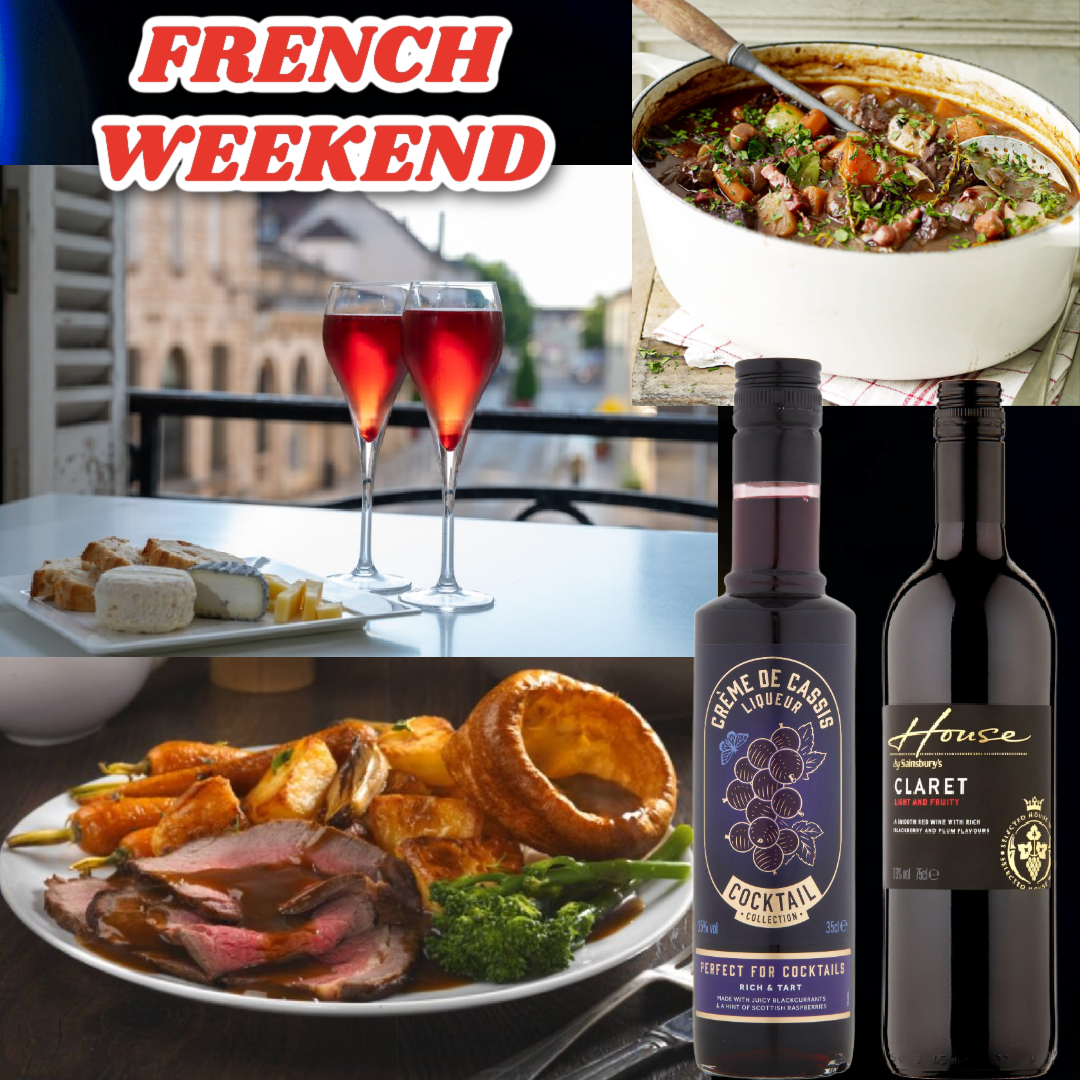
This weekend we have a bottle of Claret left over from the 50’s party,
(Sainsbury’s House Claret 75cl

Claret Bordeaux Appellation d’Origine Protégée
Light and fruity
A smooth red wine with rich blackberry and plum flavours.
This is a great staple for the wine rack – jammy and intense with blackcurrant, plum and a touch of vanilla spice.
Great served with meaty vegetable dishes or roasted red meats.
Fanny Craddock exposed the famous Yorkshire Pudding is actually from France.
Yorkshire was invaded by Vikings and and the French back in history, maybe this is why we have deep voices, are hard and cook classic French recipes without realising.
French Weekend
We are having Roast Beef and French or Yorkshire Pudding with Gravy and French Claret.
The version we do or Roast Beef and Yorkshire pudding at the moment is really easy. Growing up in Yorkshire I can obviously cook this dinner, but our extractor fan doesn’t work so we rely on packet food.
Ingredients:
M & S deli roast beef
M and S green vegetable selection
Aunt Bessies Frozen Yorkshire puddings
Sainsbury’s frozen roast potatoes, (actually really good)
Sainsbury herb new potatoes
Bisto gravy
(Just pour the gravy over the beef and it warms it up.)
If you can cook where you are found:
Beef bourguignon

Ingredients
Nutrition
- 1.6kg braising steakcut into large chunks
- 3 bay leaves
- small bunch thyme
- 2 bottles cheap red wine
- 2 tbsp oil
- 3 large or 6 normal carrotscut into large chunks
- 2 onionsroughly chopped
- 3 tbsp plain flour
- 1 tbsp tomato purée
To serve
- small knob butter
- 300g bacon lardons
- 500g pearl onionsor small shallots, peeled
- 400g mushroomshalved
- chopped parsley
Method
- step 1Tip 1.6kg braising steak, cut into large chunks, into a large bowl with 3 bay leaves, a small bunch of thyme, 2 bottles of red wine and some pepper, then cover and leave in the fridge overnight.
- step 2Heat the oven to 200C/180C fan/gas 6.
- step 3Place a colander over another large bowl and strain the marinated meat, keeping the wine.
- step 4Heat 1 tbsp oil in a large frying pan, then brown the meat in batches, transferring to a plate once browned. When all the meat is browned, pour a little wine into the now-empty frying pan and bubble to release any caramelised bits from the pan.
- step 5Heat 1 tbsp oil in a large casserole and fry 3 large or 6 normal carrots, cut into large chunks, and 2 roughly chopped onions until they start to colour. Stir in 3 tbsp plain flour for 1 min, then add 1 tbsp tomato purée.
- step 6Add the beef and any juices, the wine from the frying pan and the rest of the wine and herbs. Season and bring to a simmer. Give everything a good stir, then cover.
- step 7Transfer to the oven and bake for 2 hrs until the meat is really tender. Cool. Will freeze for up to 3 months.
- step 8To serve, defrost completely overnight in the fridge if frozen, then place on a low heat to warm through.
- step 9Meanwhile, heat a small knob of butter in a frying pan and add 300g bacon lardons and 500g peeled pearl onions or small shallots. Sizzle for about 10 mins until the bacon starts to crisp and the onions soften and colour.
- step 10Add 400g halved mushrooms and fry for another 5 mins, then stir everything into the stew and heat for 10 mins more. Serve scattered with chopped parsley.
What is beef bourguignon?
A traditional French dish of slow cooked beef in a red wine sauce, with small onions, button mushrooms and bacon lardons. It’s traditionally named from the Burgundy region in France, where it originated. It’s cooked until the meat is falling apart, and the wine-rich gravy thickens slightly to coat the meat. It’s a comforting, slow cooked dish perfect for mash potato, soft polenta or simply some crusty bread for mopping up the gravy.
Which cut of beef is best?
Braising steak is the classic cut of meat for bourguignon. Often sold as braising or stewing steak, it can come from many parts of the animal, but all the hard working muscles like shin, chuck, and blade that need a low and slow approach to break down the tough muscle fibres. It has a decent marbling of fat in the meat, and it needs quite a lot of cooking to become tender. As it does, the fat melts into the sauce creating a deeply flavoured gravy, and keeps the meat succulent, basting it as it melts. You can buy pre-diced braising steak but it’s often cut into very small pieces, so buying steaks or a joint of braising steak and cutting it yourself will give you more texture as the meat falls apart when cooked, and won’t dry out during slow cooking.
Chuck beef/braising steak, does it need to have fat?
The meat does need a good marbling of fat to keep it moist when cooking, but you can remove any larger, tougher pieces of surface fat before cooking, and remove any sinew as this won’t break down.
How to cook beef bourguignon
Should you leave the beef to marinade overnight?
Marinating the beef in red wine does two things; the acid in the wine starts to breakdown the proteins in the meat, allowing more of the flavours to penetrate the beef, and it also flavours the wine with more beefy flavours in return, with more time for the herbs and meat to infuse, creating a more complex and flavourful bourguignon. If you don’t have time, it isn’t a compulsory step, as the oven and slow cooking does a lot of the work in terms of melding flavours, but it does add an extra layer of richness and complexity.
Why is the slow stewing important? Does it make the meat more tender?
Slow cooking is an important step of bourguignon as it tenderises the meat, and reduces the wine into a lovely gravy as the alcohol evaporates. Slow cooking also melts that important layer of fat in the beef to enrich the sauce.
Is flour important?
Dusting the beef in flour before searing, or adding flour to the softened vegetables at the start of cooking is a really important step in the bourguignon, which often has lots of liquid. Usually a least a bottle of red wine, and sometimes extra beef stock to cover the meat. This flour thickens the sauce to create a glossy gravy that covers the meat, this is especially important as the stew is simmered covered, often in the oven, which means your meat doesn’t dry out, but you also won’t have a watery gravy when it’s done. It’s sometimes added as a dusting over the meat before searing which creates a golden crust over the beef, or it can be stirred into the softened vegetables as they’re frying if the meat is marinated beforehand.
Do I need to fry everything off before slow cooking?
Searing the chunks of beef before slow-cooking adds extra flavour and colour, creating a richer, darker sauce due to the caramelised sugars. You only need to sear the outside of the meat before braising – you don’t need to cook all the way through. Cooking the meat in batches helps create caramelisation – overcrowding the pan will mean there’s more meat juice in the pan, which will stop the meat from browning.
What happens if the sauce is too thick or thin after stewing for 2 hrs?
If your sauce is too thick:
- Add a splash of hot beef stock or water to the pan. Bring back to a simmer over the hob, if you need to, until you get the desired consistency.
- It’s best to check your bourguignon halfway through cooking to make sure the meat is still covered by liquid, as it could dry out the meat if not submerged.
- If the lid doesn’t have a very good seal, you can always cover the dish with foil before putting on the lid – this will help prevent evaporation during cooking.
If your sauce is too thin:
- You can enrich it using a ‘beurre manie,’ which is a thick paste of equal quantities of softened butter and plain flour (you’ll only need 2-3 tsp of each). Mash to a paste in a small bowl, then add to the gravy in small knobs while stirring constantly over a low heat. This will thicken and enrich the sauce, creating a shiny, glossy gravy. This is a classic French technique for thickening gravies, soups, sauces and casseroles.
- If you don’t want to add more fat to the dish, you can combine cornflour with a little cold water to make a thin paste, and add this sparingly to the sauce. It will thicken very quickly when stirring over the heat, so only add a little at a time, and cook for a few minutes to cook out the raw cornflour before serving.
Why don’t you add the mushrooms and onions with the beef?
Due to the long cooking time, the onions and mushrooms would overcook and become mushy before the meat becomes tender.
Can you overcook beef bourguignon?
Although this is a sturdy dish that can withstand hours of cooking, depending on the cut and size of the meat pieces, it is possible to overcook it as all the melting fat renders out of the meat, leaving it quite dry to bite into. It’s best to check a piece of the meat after two hours, making sure the meat falls apart and is tender. Keep cooking up until this point, but it won’t improve the flavour or texture if you cook it for longer.
Which wine is best for beef bourguignon?
A lot of traditional chefs believe you can taste the quality of the wine used in the final dish, so they only use wine that’s good enough to serve on the table along with the food. However, this recipe would work with any red wine that suits your budget – preferably French to keep to its classic roots. A full bodied, rich red wine made from pinot noir grapes is the classic wine made in the Burgundy region so would be excellent in this dish.
What is beef bourguignon served with?
Mashed potatoes is the classic side dish for beef bourguignon, although a chunk of crusty bread would be a welcome lighter alternative. Try other mashes like celeriac, carrot and swede or butterbean mash if you fancy a change.
You can also serve with soft polenta, made by whisking fine polenta or cornmeal into vegetable or chicken stock, and beating until soft and dollops of the spoon, like mash, enriched with butter and sometimes cheese.
Nutrition: per serving
- 861 kcal
Aperitif

The kir
A kir is the most classic French aperitif to order in a café, a sweet two-ingredient cocktail that takes seconds to make and is always served in a small wineglass. Sticklers for tradition will tell you that a kir is truly Burgundian, blackcurrant liqueur cassis topped off with the local white wine, aligoté. Some say it was invented to hide the wine’s poor taste.
These days, many aligotés are seriously good, and the French are generally flexible about the recipe. You could swap out the cassis for crème de mûre (blackberry liqueur) or even crème de pêche (peach liqueur). In Brittany, the wine is often replaced with cider to make a lighter and longer kir Breton.
Will do this with French Cheese
beginners-guide-to-classic-french-aperitifs
French Digestif

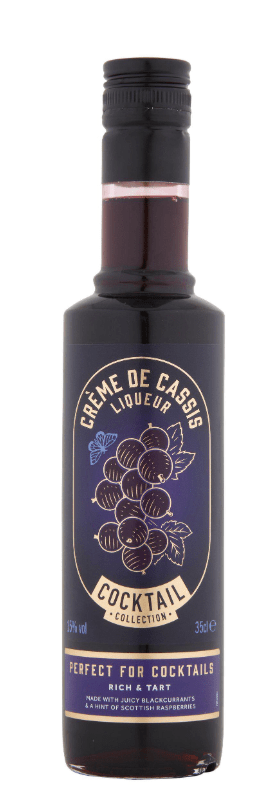
Still got some Grand Marnier, will try for creme de cassis to make the Kir Royal.
The two types of Chartreuse we know today were both invented in 1840: la Chartreuse verte (the green Chartreuse) is the stronger one, with an alcohol content of 55%, while la Chartreuse jaune (the yellow Chartreuse) is milder and sweeter, with a more standard 40% of alcohol content. The colors that give them their names are due to the specific mix of plants and herbs that compose them.
Conclusion
My favourite Dinner ever.
Really enjoying Aperitif and love Camembert Cheese.
Love Grand Marnier and Creme de Cassis, coincidently the lady who introduced me to Cassis also taught me how to warm sliced beef back up.
Hopefully get to make Beef bourguignon one day.
Hope you like this idea or it inspires you to do French weekend.
Enjoy
Saphire
 SAPHIRE LIFESTYLE BLOG