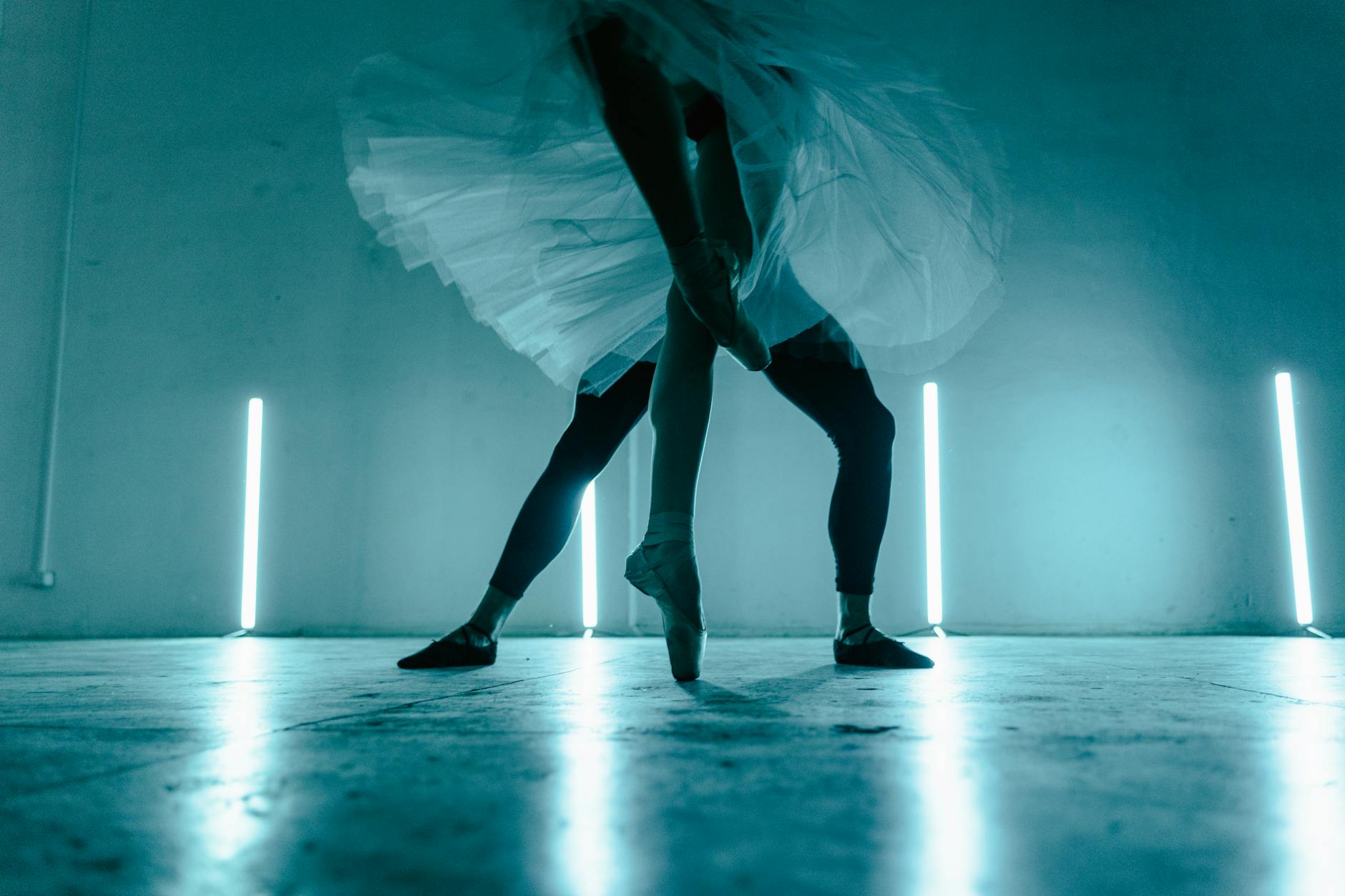
Pointe shoe/Why do people still Ballet Dance?
I ended up in a mess doing barre work for two months so this is a study into why my ankles went in a funny position and I put weight on.
Luckily I’m going back to normal now, but why don’t other women stop at this point.
A study into Ballet Dancing and bewilderment of why women do it?
This is just a badly put together collection of info off the internet.
I’m not bothered to attempt to write it properly.
Really glad I stopped after discovering this.
It is also boring.
And Degas painted ballet dancers heads as rats as he thought that was how low down they were.
There is also a video arguing against all this research to give a fair argument.
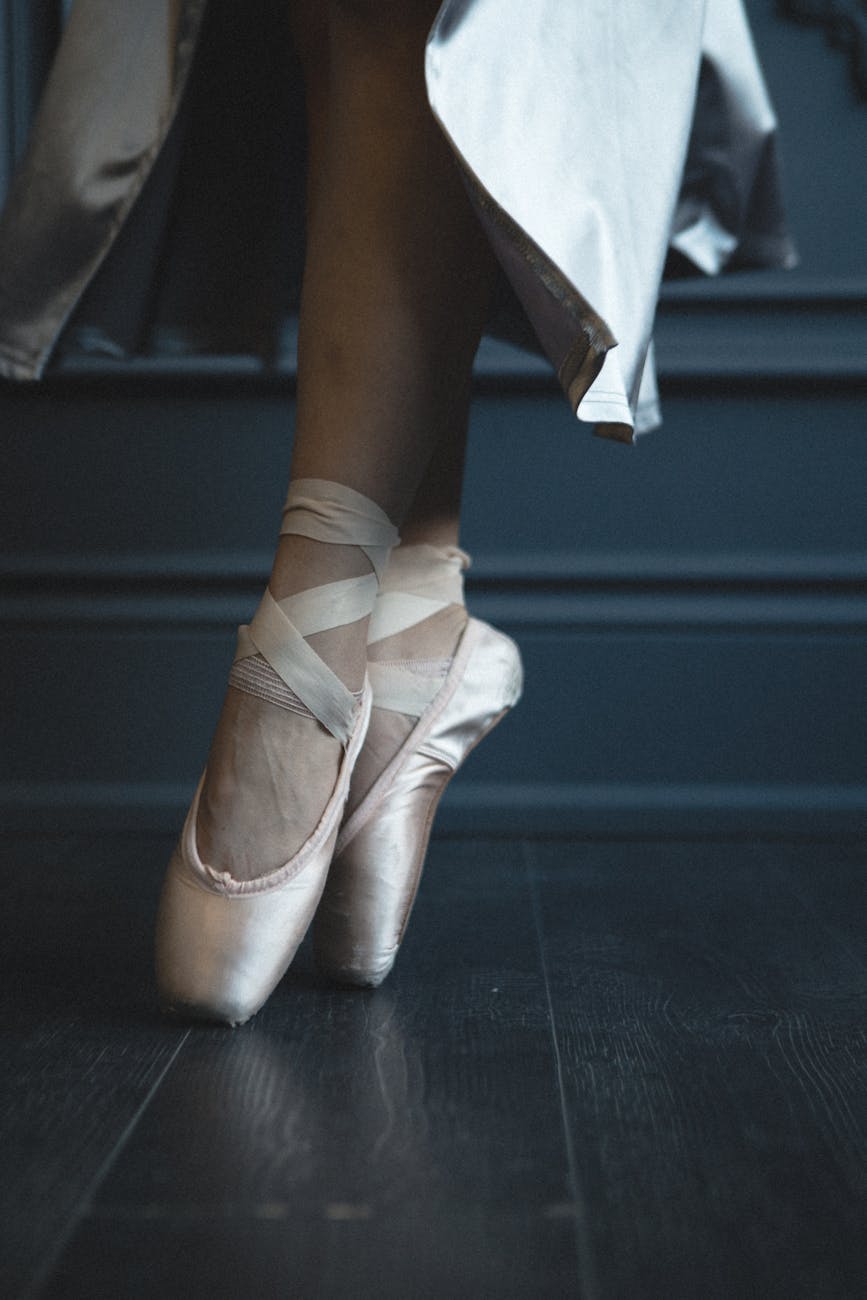
This is what en point means
From Wikipedia, the free encyclopedia
Not to be confused with Pointed shoe.

A pointe shoe (UK: /pwæ̃t/, US: /pwɑːnt, pɔːɪnt/), also referred to as a ballet shoe,[1][2][3][4] is a type of shoe worn by ballet dancers when performing pointe work. Pointe shoes were conceived in response to the desire for dancers to appear weightless and sylph-like and have evolved to enable dancers to dance en pointe (on the tips of their toes) for extended periods of time.[5][6] They are manufactured in a variety of colors, most commonly in shades of light pink.
History
[edit]

Women began to dance ballet in 1681, twenty years after King Louis XIV of France ordered the founding of the Académie Royale de Danse.[7] At that time, the standard women’s ballet shoe had heels. In the 1730s, dancer Marie Camargo of the Paris Opéra Ballet was the first to wear a non-heeled shoe, enabling her to perform leaps that would have been difficult, if not impossible, in the more conventional shoes of the age.[8] After the French Revolution, heels were completely eliminated from standard ballet shoes. These flat-bottomed predecessors of the modern pointe shoe were secured to the feet by ribbons and incorporated pleats under the toes to enable dancers to leap, execute turns, and fully extend their feet.
The first dancers to rise up on their toes did so with the help of an invention by Charles Didelot in 1796.[9] His “flying machine” lifted dancers upward, allowing them to stand on their toes before leaving the ground.[8] This lightness and ethereal quality was well received by audiences and, as a result, choreographers began to look for ways to incorporate more pointe work into their pieces.
As dance progressed into the 19th century, the emphasis on technical skill increased, as did the desire to dance en pointe without the aid of wires. When Marie Taglioni first danced La Sylphide en pointe, her shoes were nothing more than modified satin slippers; the soles were made of leather and the sides and toes were darned to help the shoes hold their shapes.[10] Because the shoes of this period offered no support, dancers would pad their toes for comfort and rely on the strength of their feet and ankles for support.
The next substantially different form of pointe shoe appeared in Italy in the late 19th century. Dancers like Pierina Legnani wore shoes with a sturdy, flat platform at the front end of the shoe, rather than the more sharply pointed toe of earlier models. These shoes also included a box—made of layers of fabric—for containing the toes, and a stiffer, stronger sole. They were constructed without nails and the soles were only stiffened at the toes, making them nearly silent. By 1880s, shoemaker Salvatore Capezio also improved the construction of pointe shoes after a series of work for repairing pointe shoes.[11][12]
The birth of the modern pointe shoe is often attributed to the early 20th-century Russian ballerina Anna Pavlova, who was one of the most famous and influential dancers of her time. Pavlova had particularly high, arched insteps, which left her vulnerable to injury when dancing en pointe. She also had slender, tapered feet, which resulted in excessive pressure on her big toes. To compensate for this, she inserted toughened leather soles into her shoes for extra support and flattened and hardened the toe area to form a box.[10]
Men have not historically performed in pointe shoes except for comedic effect.[13] Examples of this include Les Ballets Trockadero de Monte Carlo, and characters such as Bottom in A Midsummer Night’s Dream and the evil stepsisters in Cinderella.[8]
Controversy
[edit]
Pointe shoes employ structural reinforcements in both shank and toe box in an attempt to distribute the dancer’s weight load throughout the feet, thus reducing the load on the toes enough to enable the dancer to support all their body weight on fully vertical feet.
But this belief is disputed. Nothing in pointe shoe design prevents a foot’s “slippage”, in which, when en pointe, the dancer’s weight forces their foot down into the shoe until their big toe meets the end of the toe box. Measurements have shown that most of the dancer’s weight en pointe is borne by the big toe(s) regardless of the length of the second toe. Hence, such reinforcements cannot and do not distribute the weight load throughout the foot as claimed.[14]
Construction
[edit]

Every dancer has unique feet, with variations that include toe length and shape, arch flexibility, and mechanical strength. Consequently, most pointe shoe manufacturers produce more than one model of shoe, with each model offering a different fit, as well as custom fitted shoes. Regardless of the manufacturer or model, however, all pointe shoes share two important structural features that enable dancers to dance on the tips of their toes:
- A box within the front end of the shoe that encases and supports the dancer’s toes.
- A shank, which is a piece of rigid material that serves to stiffen the sole so as to provide support for the arch of the en pointe foot.[10]
The exterior of a pointe shoe is covered with fabric, thus concealing the box and other internal structural elements and lending an aesthetically pleasing look to the shoe. Most pointe shoes are covered with satin, but some are available with canvas exteriors. Pointe shoes are most often available in light pink colors and less commonly in black and white. In recent years, pointe shoes have also become more diverse in color. For example, many pointe shoe makers, like Bloch, offer pointe shoes in various skin tones ranging from light pink to deeper browns to suit darker complexions. When other colors are desired (e.g., to match a costume), pointe shoes may be dyed, or ordered in custom colors.
The vamp refers to the shoe’s upper piece, measured from the platform to the drawstring; normally, longer toes call for a longer vamp. The throat is the edge of the vamp above the arch of the foot; it is usually either v-shaped or round, which tend to suit feet with higher or lower arches, respectively. The drawstring is located within the binding on the throat; this may be made from either elastic or lace.
Box
[edit]

The box is a rigid enclosure within the front end of the shoe that encases and supports the dancer’s toes.[15] The front end of the box is flattened so as to form a platform upon which the dancer can balance, and fabric covers the exterior of the box for aesthetics.
In conventional pointe shoes, the box is typically made from tightly packed layers of paper, paste and fabric that have been glued together and then shaped into an enclosure.[15] When the glue dries, it becomes hard and provides the required stiffness. In some newer pointe shoes, the box may be made from plastic and rubber, with rigidity provided by the plastic.[15]
Box shapes vary widely among shoe models and manufacturers. A number of shape attributes, including box length, height, taper angle and platform area, determine the suitability of a shoe for any particular foot.[15]
Sole
[edit]

For most pointe shoes, the sole is constructed from a piece of leather that is attached to the shoe with adhesive and reinforced by stitching along its edges.[15] The sole overlaps and secures the unfinished edges of the shoe’s exterior fabric. Pointe shoes may be manufactured with either scraped soles, which provide superior traction, or buffed soles, which have a smoother surface for reduced traction.
Aesthetic appearance is of paramount importance for modern pointe shoes. To achieve an elegant appearance, the shoe’s more decorative outer fabric is prominently featured, covering the maximum possible area of the shoe’s visible surfaces. To this end, the sole is made of thin material to give it a minimal profile, and a margin of satin is artfully pleated around it so that the sole covers only part of the bottom of the shoe.
Shank
[edit]

Shanks are typically made from leather, plastic, cardstock, or layers of glue-hardened burlap. The flexibility of a shank is determined by its thickness and the type of material used. A shank’s thickness may be consistent throughout or it may vary along its length to produce different strengths at select points. For example, slits may be cut across a shank at demi-pointe to enhance roll through. Also, a shank’s thickness may transition at some point along its length in order to implement differing strengths above and below the transition. Standard pointe shoes typically have a full shank, in which the shank runs the full length of the sole, or fractional (e.g., half or three-quarter) length shanks. Many pointe shoe manufacturers offer a choice of shank materials, and some will build shoes with customized shanks of varying stiffness and length.
Different pointe shoe makers offer different strengths of shank. For example, Grishko, a Russian pointe shoe company, offers various shank strengths such as super soft, soft, medium, hard, and super hard. The strength of the shank mostly depends on the arch and strength of the dancer’s foot.[16] If the dancer has a strong and flexible arch, they would need a hard or super hard shank to support the foot while en pointe properly. If the dancer is starting pointe and has weaker feet, a super soft or soft shank would be more suitable, allowing the dancer to point their foot more easily. Additionally, dancers will sometimes wear different pointe shoe models for different performance pieces. In such cases, the choreography can dictate the type of shank required; a lyrical style may call for a softer shoe, while an aggressive style with many turns is more easily performed in a hard, stiff shoe.
Ribbons and elastic band
[edit]

A pointe shoe employs two fabric ribbons and an elastic band to secure it to the foot. Most of the work of securing shoes to feet is done by the ribbons. The two ribbons wrap around the dancer’s ankle in opposite directions, overlapping one another so as to form a cross at the front. The ends are then tied together in a knot, which is then tucked under the ribbon on the inside of the ankle to hide it from view.
The elastic band—which traverses the front of the ankle below the ribbons—keeps the heel of the shoe in place against the foot when the dancer is en pointe. Optionally, two overlapped elastic bands may be used on each shoe to increase tension and holding power.
The locations where the band and ribbons attach to a shoe is critical, as incorrect placement can result in a poorly fitting shoe.[17] Some dancers choose to sew the ribbons and elastics onto the inside of the shoe, whereas others sew them outside onto the silk exterior. Typically, the loose ends of newly sewn ribbons are briefly exposed to open flames to melt them and thus prevent fraying.
Pré-pointe shoe
[edit]
A pré-pointe shoe, which is also variously called a break-down, “demi-pointe” or a soft-block shoe, shares many characteristics with pointe shoes. For example, its outer appearance resembles that of a pointe shoe and it has a toe box, although the box is softer and the wings (sides of the toe box) are typically not as deep as those found on pointe shoes. Pré-pointe shoes are secured to the feet with ribbons and elastic band in identical fashion to pointe shoes. Unlike pointe shoes, however, demi-pointe shoes have no shank and, as a result, they do not provide the support necessary for proper pointe work.[18]
Pré-pointe shoes are most often used to train dancers who are new to pointe technique. They serve to acclimate dancers to the feel of wearing pointe shoes and to strengthen the ankles and feet in preparation for dancing en pointe in pointe shoes. The toe box allows the dancer to experience the feel of a pointe shoe, while the insole and outsole work together to provide the resistance needed for developing foot and ankle strength.
Manufacturing process
[edit]
Traditional pointe shoes are usually manufactured using a method known as turnshoe, in which each shoe is initially assembled inside-out on a last and then turned right-side-out before finishing.[19] When manufacturing standard pointe shoes, a standardized, common last is used for both left and right shoes, resulting in identical left and right shoes in a pair. Some ballerinas have custom-made lasts that replicate the shapes of their own feet; these may be supplied to a pointe shoe manufacturer for the purpose of manufacturing custom shoes.
Breaking in
[edit]
Dancers typically “break in” new pointe shoes to reduce or eliminate the discomfort they commonly cause. Typically this is done by performing relevés that flex the box and shank in a natural manner, thus causing the box shape and shank flex points to adapt to the dancer’s feet.[15] Various other methods have been employed for breaking in pointe shoes, including deforming them with hands or against hard surfaces, striking them on hard surfaces, and moistening or heating the boxes to soften the glues, but these methods typically are ineffective as they do not cause the shoes to conform to the feet and also may damage the shoes or shorten their usable lifetimes.[15] Pointe shoes usually are only broken in by professional dancers who use pointe shoes for multiple hours every day. Non-professional dancers and dancers beginning to learn pointe typically do not break in their pointe shoes by hand so that they last longer.
Accessories
[edit]
A dancer may experience discomfort while wearing a pointe shoe even after the shoe has been broken in. Several devices are commonly used to mitigate the discomfort:[20]
- Toe pads are pouches that encapsulate and cushion the toes from the unyielding box and prevent friction that can cause blistering. These are typically made from thin, fabric-covered gel sheets.
- Gel toe spacers of various shapes and sizes are inserted between toes; these serve to adjust toe spacing and alignment so as to alleviate pain at the bunion joint between the big toe and first toe.
- Lambswool is stretched and wrapped around toes to reduce chafing and the likelihood of blisters. After several uses, the lambswool becomes densely packed and custom fitted to the dancer’s foot.
- Tape is wrapped around toes to reduce chafing and blisters.
- Blister pads are small gel squares that prevent damage from rubbing and friction.

Toe pads

Toe spacers
Lifetime
[edit]
In the course of normal use, there are three predominant types of wear on a pointe shoe that will determine its useful lifetime. The most important of these is shank wear. As the body of the shoe is repetitively flexed, the shank gradually weakens and loses its ability to provide support. A pointe shoe is no longer serviceable when the shank breaks or becomes too soft to provide support. The second is the softening of the box and especially the platform on which the dancer balances. When a pointe shoe has been worn to the point where it is no longer safe to wear, the shoe is typically referred to as “dead”.
The other primary type of wear involves the exterior fabric. In pointe work the front face and bottom edge of the toe box are subjected to friction against the performance surface. This friction will eventually wear through the shoe’s outer fabric covering, thereby exposing the toe box and creating loose, frayed fabric edges. Unlike a weakened shank, damaged outer fabric does not affect the performance of a shoe. Due to its unprofessional appearance, however, damaged fabric may render the shoe unfit to wear in situations other than informal practice or rehearsal.

Under moderate usage, a pair of pointe shoes will typically last through ten to twenty hours of wear. For dance students, this often translates into weeks or months of serviceable use from a pair of pointe shoes. Professional dancers typically wear out pointe shoes more quickly; a new pair may wear out in a single performance. For example, in 2013 New York City Ballet ordered 8,500 pairs (for 180 dancers)[21][22] and the Royal Ballet used approximately 12,000 pairs of pointe shoes.[23][24]
The lifetime of a pointe shoe depends on many factors, including:
- Usage: More aggressive dance styles and more frequent, longer durations of use will hasten wear.
- Dance technique: Improper technique subjects shoes to unusual stresses that may lead to premature failure.
- Fit: Well fitting pointe shoes encourage proper technique, which in turn leads to longer shoe life.
- Weight: Greater dancer weight exerts proportionally greater stresses to the shoes, leading to faster wear.
- Construction: Varying qualities and types of construction will yield different life expectancies.
- Shank material: The stiffness and integrity of various shank materials will degrade at varying rates.
- Breaking-in: The breaking-in process simulates accelerated wear, and thus may shorten the life of a shoe.
- Performance surface: Rough surfaces cause rapid wear of the exterior fabric, in contrast to smooth surfaces such as Marley floors, which minimize the rate of fabric wear.
- Foot Strength: Stronger arch muscles exert greater force on the shank, causing it to bend more and thus accelerating its wear.
See also
[edit]
References
[edit]
- ^ “Process of making a ballet toe shoe”. Retrieved December 19, 2022.
- ^ Greenfield, Rebecca. “Celebrity Invention: Bill Nye’s Ballet Slipper”. The Atlantic. Retrieved December 19, 2022.
- ^ Knapp, S.D. (2000). The Contemporary Thesaurus of Search Terms and Synonyms: A Guide for Natural Language Computer Searching. Oryx Press. p. 60. ISBN 978-1-57356-107-5. Retrieved 28 Dec 2022.
- ^ Lesko, K.M. (2017). Jeanne Devereaux, Prima Ballerina of Vaudeville and Broadway: “She Ran Between the Raindrops”. McFarland, Incorporated, Publishers. p. 82. ISBN 978-1-4766-2749-6. Retrieved 28 Dec 2022.
- ^ “Dance Talk Article | Miller’s Dance Studio”. millersdancestudio.com. Retrieved 2023-12-17.
- ^ Cooper, Grier. “History of Pointe Shoes: Their Invention, Construction & Use | DanceUs.org”. http://www.danceus.org. Retrieved 2023-12-17.
- ^ “History of the pointe shoe”. http://www.brown.edu. Retrieved 2021-02-15.
- ^ Jump up to:a b c Guiheen, Julia (4 August 2020). “The History of Pointe Shoes: The Landmark Moments That Made Ballet’s Signature Shoe What It Is Today”. Pointe Magazine. Retrieved 20 October 2020.
- ^ “When the Shoe Fits, Dance In It”. http://www.arts.gov. Retrieved 2021-02-15.
- ^ Jump up to:a b c Weinman, Joanna (2013-10-21). “Pointe Shoe Evolution”. Gaynor Minden. Retrieved 2021-02-15.
- ^ Sourcing, 11 21 2015 | Fashion Fabric (2015-11-21). “Fashion Archives: The History of the Ballet Flat”. StartUp FASHION. Retrieved 2020-05-18.
- ^ Stimpert, Desiree. “Shoe Glossary: Ballerina Flats”. LiveAbout. Retrieved 2020-05-18.
- ^ Fisher, Jennifer (2014). “Why Ballet Men Do Not Stand on Their Toes (but Georgian Men Do)”. The World of Music, 2014, Music, Movement, and Masculinities. 3 (2): 59–77. JSTOR 24318176. Retrieved 19 October 2020.
- ^ Selinah Shah “Pointe shoes complicate the biomechanics of ballet” LER April 2010. R.G.Torba & D.A.Rice “Pressure analysis of the ballet shoe while en pointe.” Proceedings of the Twelfth Southern Biomedical Engineering Conference, New Orleans. LA, USA 1993, pp48-50. Doi10.1109/SBEC.1993.247350.
- ^ Jump up to:a b c d e f g Barringer, Janice; Schlesinger, Sarah (2012) [1998]. The Pointe Book (3rd ed.). Princeton Book Company, Publishers. ISBN 978-0-87127-355-0.
- ^ Shah, Selina (November 2009). “Determining a Young Dancer’s Readiness for Dancing on Pointe”. Current Sports Medicine Reports. 8 (6): 295–299. doi:10.1249/JSR.0b013e3181c1ddf1. PMID 19904068. S2CID 43706514.
- ^ Reinhardt, Angela (2008) [2008]. Pointe shoes, tips and tricks (1st ed.). Dance Books Ltd. ISBN 978-1-85273-115-1.
- ^ Cyprus, Diving in (2019-09-20). “10 Burning questions about Pointe Shoes”. DANCE | LIFE | BALANCE. Retrieved 2021-02-15.
- ^ “Dancing Shoes”. The Ballet Bag. Retrieved 2013-03-22.
- ^ Guiheen, Julia (2020-08-04). “The History of Pointe Shoes: The Landmark Moments That Made Ballet’s Signature Shoe What It Is Today”. Pointe Magazine. Retrieved 2024-02-22.
- ^ “Why It Takes 8,500 Pairs Of Pointe Shoes To Put On ‘The Nutcracker'”. Huffpost. December 18, 2013.
To ensure that all dancers have enough shoes, the company orders about 8,500 pairs every year.
- ^ “Meet Our Dancers”. New York City Ballet.
- ^ “Watch: See The Royal Ballet from the perspective of a pointe shoe”. Royal Opera House. 13 December 2013.
Each Season our Royal Ballet dancers use about 12,000 pairs of shoes. Combined with the character shoes, elastic, ribbons and detailing relevant to each production, the total cost for footwear is over £250,000 a year.
- ^ “Dancers”. Royal Opera House.
https://en.wikipedia.org/wiki/Pointe_shoe
The perception that the damage from ballet is downplayed or misrepresented often stems from a combination of toxic traditional culture, the pursuit of an “effortless” aesthetic, and a gradual, necessary evolution toward better training and health practices. While ballet is undeniably demanding—with studies showing 47–97% of professional dancers get injured annually—the narrative surrounding it is changing, leading to conflicting accounts of the actual damage. [1, 2, 3, 4, 5]
Here is why there are differing accounts of the damage done by ballet:
1. The “Beauty is Pain” Mentality [1]
For decades, ballet culture equated pain with dedication. [1, 2]
- Silence and Stoicism: Dancers were often taught to hide injuries and perform through pain, creating the false image that the art form is effortless and painless.
- “Messed Up” Feet Stereotype: While extreme cases exist due to improper care, modern techniques, better fitting, and protective equipment (like padding/spacers) have significantly reduced severe, chronic foot damage for many, making old, graphic tales of damaged feet less relevant to current professional practice. [1, 2, 3, 4, 5]
2. Evolution in Training and Science
- Old vs. New Methods: Older methods sometimes relied on “forcing” turnout and high extensions, which cause long-term hip and back issues, say Quora contributors.
- Improved Conditioning: Contemporary training focuses more on functional anatomy, strength training, and injury prevention, which reduces the severe long-term injuries of the past. [1, 2, 3, 4, 5]
3. Misconceptions About “Real” Damage
- Overuse vs. Sudden Injury: Most ballet injuries are not sudden, dramatic accidents, but rather chronic overuse injuries that develop over time due to high repetition.
- The “Recreational” Fallacy: Adult amateur dancers often feel they are not “real” dancers, so they may fail to recognize that their overuse injuries are caused by the same demanding, repetitive ballet movements, according to this YouTube video. [1]
4. Psychological Pressure and Perfectionism
- Body Image Concerns: The pressure to maintain a specific, often extreme, aesthetic (the “ballet body”) has caused significant psychological damage and eating disorders, which is a different, often ignored type of harm, say The Otter.
Ballet does not inherently age people fast, but its intense, high-impact nature can lead to faster physical wear and tear on professionals, while offering significant anti-aging benefits for recreational dancers. [1, 2, 3]
Here is the breakdown of how ballet affects aging:
1. Professional Level: Intense Wear
- Physical Wear: Due to the extreme demands on the body, professional ballet dancers often have shorter careers, with many retiring in their mid-to-late 30s, as they experience higher rates of injury and physical strain.
- “Free Radicals”: Intense, regular, and high-intensity dancing can increase free radicals in the body by \(20\%\) or more, which can increase the speed of aging, according to Dance Informa.
- Physical Toll: Years of performing in pointe shoes can lead to foot damage, often referred to as “Ballerina Feet,” including discolored toenails and achilles tendonitis, as shown in this YouTube video. [1, 2, 3, 4]
- Survival in a Tough Career: Dancers may downplay injuries to avoid losing roles or jobs in a highly competitive, low-paying field where professional careers often end early, say a Reddit thread. [1, 2, 3, 4]
Summary of Reality vs. Myth
- Myth: “Ballet is only for the exceptionally strong and never hurts.”
- Reality: “Ballet causes high rates of injuries (47–97% annually), but modern training, improved care, and better knowledge are helping reduce long-term damage”. [1, 2, 3, 4, 5]
Ultimately, the “lies” are often just outdated myths. While professional ballet is inherently high-risk and strenuous, the industry is increasingly focused on, rather than ignoring, the physical toll,
why+are+people+lying+about+the+damage+done+by+ballet
Ballet is a physically demanding art form that puts high, repetitive stress on the joints, which can lead to chronic injuries and long-term musculoskeletal damage, particularly in the ankles, hips, and knees. While it offers significant benefits for strength, coordination, and overall health, the pursuit of a specific aesthetic—such as extreme turnout—can lead to long-term wear and tear, including accelerated arthritis. [1, 2, 3, 4, 5]
Long-Term Impact on Joints
Studies on professional ballet dancers indicate a high prevalence of overuse injuries, with up to 95% of dancers sustaining injuries during their careers. [1]
- Ankles & Feet: Due to repetitive pointe work (landing from jumps and turning), dancers are highly susceptible to chronic tendonitis, stress fractures in the metatarsals/tibia, and posterior ankle impingement (often resulting from a bony growth called an os trigonum). Long-term, this can result in permanent ankle instability and chronic arthritis.
- Hips: “Dancer’s hip” or snapping hip syndrome is common, often involving labral tears and hip impingement (FAI) from forcing turnouts. The intense pressure can lead to premature hip joint deterioration, sometimes requiring hip replacements in professional dancers before age 40.
- Knees: Patellofemoral pain syndrome, or “dancer’s knee,” is a frequent overuse injury caused by repeated pliés and jumps, leading to cartilage irritation and damage, which can develop into arthritis. [1, 2, 3, 4, 5]
Causes of Long-Term Damage
- Overuse and Fatigue: Most injuries are not sudden, but rather chronic overuse injuries resulting from high-intensity training with insufficient recovery time.
- Forced Turnout: Forcing rotation from the feet and knees rather than the hips places abnormal twisting pressure on the joints, particularly the knees and ankles.
- Pointe Work: The repetitive loading of 2–3 times body weight onto the small bones and tendons of the feet. [1, 2, 3, 5]
Recreational vs. Professional
The severity of damage is often proportional to the intensity of training. While professional dancers face the highest risk, adult recreational dancers can also experience overuse injuries if they do not adequately train for the demands of the class. [1, 2, 3]
Mitigation and Prevention
Long-term damage is not inevitable and can be managed through:
- Proper Technique: Ensuring turnout is supported by proper muscle engagement.
- Strength Conditioning: Supplementing dance with Pilates and strengthening exercises to support joints.
- Adequate Recovery: Allowing the body to heal between classes to avoid chronic fatigue. [1, 2, 4, 5]
Disclaimer: This information is for educational purposes based on research studies. If you are experiencing pain, please consult a specialized medical professional.
ballet+is+bad+for+ankles%2C+hips%2C+knees+long+term+damage
Ballet dancers’ feet become deformed primarily due to extreme, repetitive pressure from pointe work, which places roughly three times their body weight on their toes. Years of training cause chronic issues like bunions (hallux valgus), corns, thickened toenails, and hammer toes, often exacerbated by ill-fitting shoes and early, intense training. [1, 2, 3, 4]
This video explains some of the foot problems that can occur in a dancer:


1m
What Pointe Work Does To A Dancer’s Feet


- Pointe Work Pressure: Balancing on the tips of the toes in hardened pointe shoes causes severe friction and pressure, leading to damaged nail beds, blood accumulation under calluses, and painful bunions.
- Repetitive Strain & Overuse: Dancing for hours daily—sometimes 60-hour weeks—leaves little time for recovery, causing chronic injury to the muscles and ligaments.
- Early Training (Before 11-12 years): Starting pointe work before the foot bones have hardened (before the growth plates close) can cause the soft bones to bend and permanently deform.
- Incorrect Technique: Improperly “rolling” the feet (sickling) or forcing turnout positions can cause structural damage over time.
- Poorly Fitting Shoes: If pointe shoes do not fit correctly, they can lead to increased toe crushing and faster development of structural issues. [1, 2, 3, 4, 5, 6]
Despite these issues, many dancers work with specialists to manage their foot health through padding, toe spacers, and proper technique to mitigate damage. [1, 2, 3, 4, 5]
- Comparison of hallux valgus deformed ballerinas and … – PMCHallux valgus is a malalignment of the first intermetatarsal and metatarsophalangeal joints that causes progressive and long-term …
PubMed Central (PMC) (.gov)
Show all
AI responses may include mistakes. Learn more
Ballet dancers generally do not have high amounts of body fat, but they often have highly developed, muscular thighs and strong hips due to the extreme, repetitive physical demands of the art form. While the aesthetic ideal often emphasizes a lean look, the functional reality requires significant muscle mass in the lower body for power, stability, and turn-out. [1, 2, 3]
Here is why ballet dancers develop this specific physique:
1. Extreme Muscular Development (Not Fat)
What may appear as “bulk” or “fat” on a dancer’s thighs and hips is actually intense muscle development.
- Quadriceps and Inner Thighs: Dancers engage in thousands of repetitions of pliés (bends) and jumps, which build the quadriceps. The need to hold the legs together and maintain “turnout” (rotating the legs outward from the hip) strengthens the adductors (inner thighs).
- “Turnout” Muscles: The muscles surrounding the hips and buttocks (the external rotators) are constantly used to turn the legs out, leading to highly developed, strong, and sometimes larger, hip muscles.
- Functional Strength: Dancers need this muscle for power to jump high, turn fast, and support their entire body weight while standing on pointe. [1, 2, 3, 4, 5]
Google search
Conclusion
I’m stearing clear of it.
Further info about Degas.
https://www.sothebys.com/en/articles/21-facts-about-edgar-degas
”Even his dancers receive the physiognomic treatment—he refers to his lower-class subjects as “little monkey girls”, “in the state of animals cleaning themselves.”
Women should know all this info before they go into ballet ~ just saying in ~MHO
There is obviously someone laughing at them somewhere – yet average women like me get it forced on them.
Mind you they see walking as a working class hobby.
I’m going to walk outside again one day whatever, at least it is healthy and fresh air is good for us.
 SAPHIRE LIFESTYLE BLOG