
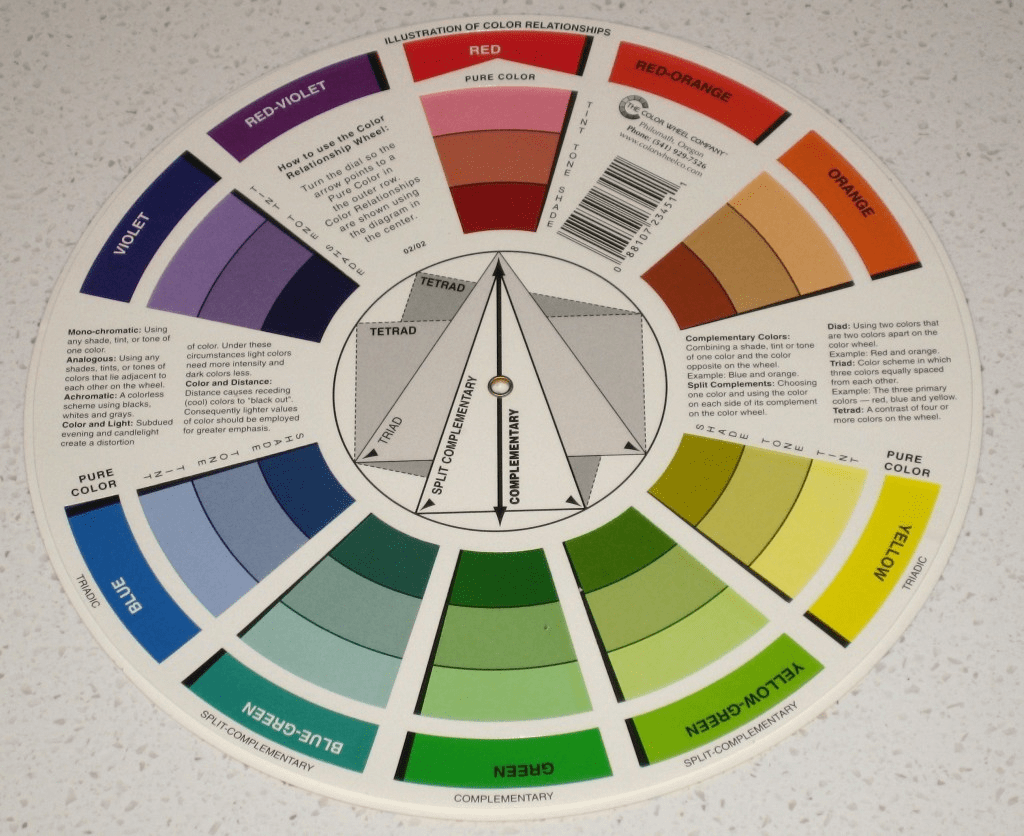
A really handy tool if you are into design, fashion etc.
Seems big on Tik Toc at the moment with seasonal colours.
Learnt about this at art college, but thought I would write up some notes I found in my email storage. Need a refresher course. Thought I may find something of interest to other people too.
These are images I found on google. If it upsets anyone I will remove them immediately. It is just for fun and inspirational uses.
COLOR WHEEL HISTORY AND EXPLANATION
The color wheel is a visual tool, used to help us comprehend and apply the principals of color theory. The application of the color wheel encompasses a vast collection of areas, such as art, architecture, fashion, and interior design. Whether it is graphic design, photography, textile design or package design, the application of the color wheel will create an emotion that ties us to the image, art or design.
HISTORY OF THE COLOR WHEEL
The original color wheel chart was created by Sir Isaac Newton, in 1666. His focus on the nature of light and color, and experimentation. Newton’s first colour circle was actually more of a pie chart, in which the bands of color he observed were dispersed in wedges, arranged around a circle. The prism produced red, blue, yellow, green and cyan. This allowed him to show the natural sequence of color by joining the two ends and creating the color wheel.
By the mid 1900’s, a German theorist, Johannes Itten, developed the color wheel we know today. He took into consideration Johann Wolfgang von Goethe’s hypothesis of the emotional value of colors, such as blue was associated with coolness and red was associated with warmth. His color wheel was based on the primary colors and contains 12 colors.
These 12 colors are as follows:
Primary – red, blue, yellow
Secondary – purple, green, orange
Tertiary – red-violet, blue-violet, blue-green, yellow-green, yellow-orange, red-orange
BASIC COLOuR THEORY
There are three basic categories of color theory – the color wheel, color harmony and context. Color theory generates a logical structure for color, but can encompass a host of definitions, concepts and design applications.
design applications.
As mentioned above, the color wheel contains:
three primary colors,
three secondary colors
and six tertiary colors.
The primary colours are thought of as traditional colours and cannot be mixed or formed by any combination of other colors.
All colours are derived from these three hues.
The secondary colors are formed by mixing the primary colours and the tertiary colors are formed by mixing a primary and a secondary colour.

Colour harmony refers to conveying a visually pleasing arrangement, and engages the viewer by forming balance and an inner sense of order.
There are three basic theories in relation to colour harmony –
a colour scheme based on analogous colours (any three colours side-by-side on the colour wheel),
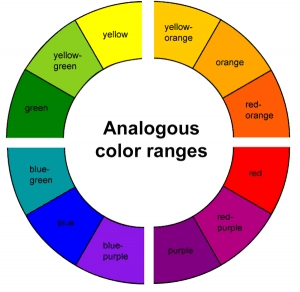
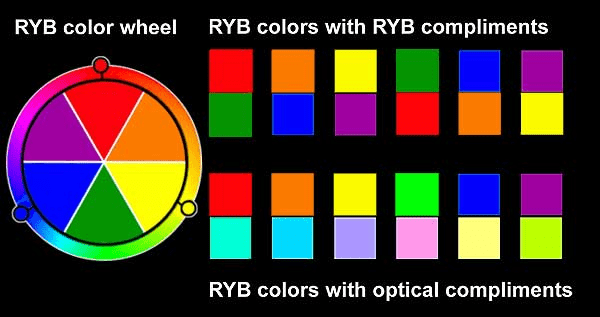
a colour scheme based on complementary colours (any two colours that are directly opposite each other on the colour wheel)

and a colour scheme based on nature (derived from natures images such as plants).
A multifaceted area of colour theory is how colour behaves in relation to other colours. Comparing colours and their effects is colour context. Colour context is used in many optical illusions, as contrast and placement will trick the eye in perceiving movement or depth of the design. Saturation, placement, hue, darkness and lightness all play a role in the context.

Can’t take credit for any of this as sourced off internet, so don’t quote me. You can use the info for inspiration though.
Find it is easier to read on wordpress than email.
It is just for my personal use, and anyone else wanting to learn or refresh their memory.

A handpainted colour wheel.
If you want you can paint your own colour wheel. Blending the colours helps you to understand it more.
The one above is a bit advanced.
Forgot how to draw a colour wheel.
Might have a go if I start to receive art products.
Will share my brands of product.
There is a famous book on colour theory that everyone used to struggle to access, maybe it is back in circulation due to tik toc? Can’t remember what that was called either.
Hope this is of help.
Would love to contribute more to this project!!!
 SAPHIRE LIFESTYLE BLOG